Set this page to:
Go to FERI in:
 CONTACT
 CONTACT
 Login
Login
 Languages

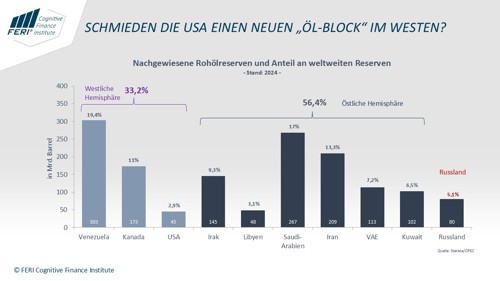
Venezuela's crude oil reserves and Canada's resources are fueling Trump's energy policy ambitions. A new “oil bloc” could be formed to counterbalance OPEC – with noticeable consequences for the global oil market, but to the benefit of the US economy.
Donald Trump's economic policy focus is on low interest rates and abundant oil at favorable prices. Against this backdrop, the recent US intervention in Venezuela is becoming increasingly controversial – as is Trump's desire to annex Canada. What is the common factor?
From the US perspective, this presents an attractive geopolitical opportunity:
A new “oil bloc” as a strategic counterweight to OPEC – with noticeable consequences for global energy markets, but to the benefit of the US economy – would be the possible outcome.
For the time being, the following questions in particular remain open: