FERI (Schweiz) stands for comprehensive, individual, transparent and sustainable advice and support. We draw on over 30 years of experience. In collaboration with the other entities of the FERI Group, we offer private investors a wide range of asset management services.
FERI (Schweiz) has a unique expertise in asset management and advisory services for discerning clients. The sustainable quality concept is based on the quality investing approach, in which financially sound companies are identified through targeted selection on the basis of various quality characteristics.
Artificial intelligence (AI), the Internet of Things (IoT) and 5G – exponential technologies will trigger a wave of transformation in society and the environment in the coming decades. FERI (Schweiz) offers the opportunity to actively participate in these developments and to invest in an innovative concept.
FERI (Schweiz)’s employees specialise in providing individual, comprehensive and long-term advice to discerning families. We provide solutions for the preservation and growth of family wealth – for this generation and the next. We offer strategic aset planning, advice on implementation, profitability monitoring, risk management, asset protection strategies and sustainability consulting.
FERI (Schweiz) offers clients a range of advisory services and individual investment solutions to give them clarity as to how compatible their investments are with the United Nations sustainable development goals and increase their understanding of this at the different levels of the investment process.
FERI (Schweiz) has a unique expertise in asset management and advisory services for discerning clients. The sustainable quality concept is based on the quality investing approach, in which financially sound companies are identified through targeted selection on the basis of various quality characteristics.
Artificial intelligence (AI), the Internet of Things (IoT) and 5G – exponential technologies will trigger a wave of transformation in society and the environment in the coming decades. FERI (Schweiz) offers the opportunity to actively participate in these developments and to invest in an innovative concept.
FERI (Schweiz) offers its clients customised solutions and individual investment strategies. Our particular strength lies in mandates with special risk-return targets, which we define individually with our clients.
FERI (Schweiz) offers clients a range of advisory services and individual investment solutions to give them clarity as to how compatible their investments are with the United Nations Sustainable Development Goals (SDG) and increase their understanding of this at the different levels of the investment process.
Set this page to:
Go to FERI in:
CONTACT
Telephone
Contact
FERI (Schweiz) AG

T +41 (0) 44 312 80 80
info@feri.ch


Tödistrasse 48
CH-8002 Zürich

Contact form
Please accept the marketing cookies here to show the form.
Telephone CONTACT
Contact CONTACT
Login
Languages
FERI (Schweiz) AG

+41 (0) 44 312 80 80
info@feri.ch


CH-8002 Zürich
Tödistrasse 48

Contact form
Please accept the marketing cookies here to show the form.
Set this page to:
Go to FERI in:

Markets Update February 2026 - The End of Trump's Emergency Tariff Regime — But Not of Tariffs

Bad Homburg, 2/24/2026
by Dr. Eduard Baitinger
  • Decision: The U.S. Supreme Court deals a setback to Trump's tariff regime
  • Uncertainty: The ruling initially creates a need for clarification, but sends a positive signal
  • Pullback: Technology stocks have recently come under pressure, but the uptrend remains intact

The past week ended with a bombshell: the United States Supreme Court ruled that President Donald Trump may not impose tariffs under the International Emergency Economic Powers Act (IEEPA). The authority to levy tariffs is part of Congress's taxing power; the executive branch can only exercise it on the basis of an explicit statutory delegation. Importantly, the ruling is statute-specific, not a broad trade policy decision. Other instruments such as anti-dumping measures remain untouched. However, these are procedurally bound and require review processes spanning several months — making short-term substitution through this route impossible.

Nevertheless, the Trump administration responded immediately: on the very day the ruling was handed down, the President announced a global tariff of 10 percent under Section 122 of the Trade Act of 1974, which he raised to the statutory maximum of 15 percent the following day. However, tariffs under Section 122 are limited to 150 days and require a balance-of-payments crisis. An extension would require Congressional approval — which appears unlikely, both because no balance-of-payments crisis exists and because there is no reliable bipartisan majority for a broadly based tariff regime.

More strategically significant than the immediate consequences is the structural shift: Trump loses the tool of an instantaneous, universally scalable tariff lever based on emergency authority. Going forward, tariffs will again generally need to be implemented on a sector- or country-specific basis, subject to procedural requirements, and with adequate lead time.

In capital markets, the ruling against blanket reciprocal tariffs creates short-term uncertainty, as existing tariff agreements will need to be renegotiated and the scope and timeline of potential tariff refunds remain open. Over the medium and long term, however, the decision is a positive signal for the institutional reliability and rules-based nature of U.S. trade policy: the ability to invoke broadly defined emergency powers is now clearly curtailed. The ruling also confirms the functioning of checks and balances and once again constrains executive discretion more firmly within the bounds of legislatively prescribed instruments. From a market perspective, this makes the trade policy framework more predictable and dependable.

Markets in an Uptrend — Tech Stocks Lag

Overall, equity markets remain in a robust uptrend. Solid fundamentals are supporting a broadly constructive investment environment. Global monetary policy is on balance neutral. Recent positive inflation data in both the U.S. and Europe have even increased the probability of further easing steps. At the same time, macroeconomic data remain stable — in both the United States and Germany, early signs of an industrial recovery are emerging. While U.S. industry is being driven primarily by AI investment, Germany is seeing improvement mainly from rising defense orders. The trend in corporate earnings also remains clearly positive.

Beneath the surface, however, markets are showing significant divergence in sector performance. Market structure is as fractured as it has rarely been in recent years. The biggest underperformer is the technology sector, which is displaying clear relative weakness. Heavy AI investment is weighing on free cash flow and leading to a noticeable decline in share buybacks. From an investor's perspective, secure returns are increasingly being replaced by AI investments with uncertain profitability — the resulting nervousness is understandable. Pronounced concerns about disruption are also weighing on the sector. Software stocks are under pressure as the market prices in the risk that generative AI will erode the value-added depth of traditional software providers, calling their long-term earnings power into question. As is often the case, the market is correct in the general direction of this repricing, but in the short term, the magnitude of the price reactions appears exaggerated.

Temporary Pullbacks Are Part of Any Megatrend

For investors, the key takeaway is this: mega-cycles are not a one-way street. Temporary phases of disillusionment, triggered by concerns over profitability and disruption, are plausible within a structural uptrend and do not initially signal a trend reversal. Over the long term, however, it is reasonable to expect that not all companies and business models will emerge as winners in the AI race. Professional investors must therefore differentiate more carefully, focusing on sustainable cash flow quality, durable competitive advantages, and companies' ability to convert their investments into earnings.
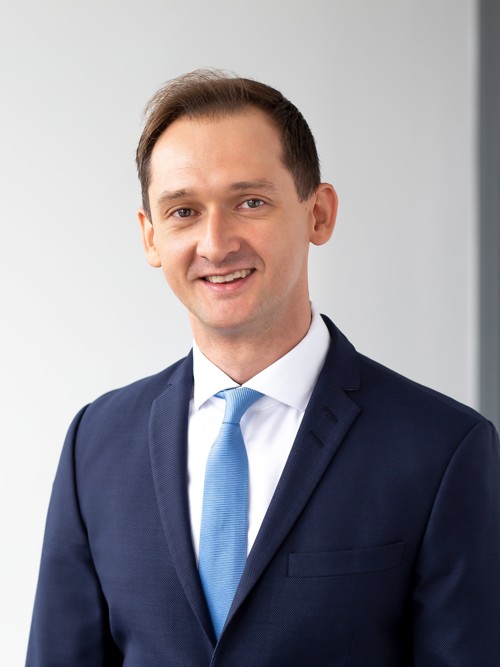

About Dr. Eduard Baitinger

Dr. Eduard Baitinger has been Head of Asset Allocation at FERI AG since 2015. Under the overall responsibility of the CIO of the FERI Group, Dr. Marcel V. Lähn, Dr. Baitinger is responsible for quantitative asset allocation in the CIO Office and various publications on the assessment of the international financial markets.

Before joining FERI, Dr. Baitinger was a research assistant at the University of Bremen and a financial analyst at an asset manager. In 2010, he completed his studies at the University of Bremen with a degree in economics, accompanied by a stay abroad in New York. In 2014, Eduard Baitinger completed his doctorate with distinction on new approaches to quantitative asset management. Dr. Baitinger publishes regularly in academic journals and acts as an academic reviewer.

About FERI

The FERI Group, headquartered in Bad Homburg, Germany, was founded in 1987 and has developed into one of the leading multi-asset investment houses in the German-speaking region. FERI offers tailor-made solutions for institutional investors, family assets and foundations in the business areas:

Founded in 2016, the FERI Cognitive Finance Institute acts as a strategic research center and creative think tank within the FERI Group, with a clear focus on innovative analyses and method development for long-term aspects of economic and capital market research.

Together with MLP, FERI currently manages assets of EUR 64.2 billion, including around EUR 18.6 billion in alternative investments. In addition to its headquarters in Bad Homburg, the FERI Group also has offices in Düsseldorf, Hamburg, Hanover, Munich, Luxembourg, Vienna and Zurich.


Media relations contact

Marcel Renné

Chairman of the Board & CEO

Rathausplatz 8-10

D-61348 Bad Homburg

Dr. Eduard Baitinger