FERI (Schweiz) stands for comprehensive, individual, transparent and sustainable advice and support. We draw on over 30 years of experience. In collaboration with the other entities of the FERI Group, we offer private investors a wide range of asset management services.
FERI (Schweiz) has a unique expertise in asset management and advisory services for discerning clients. The sustainable quality concept is based on the quality investing approach, in which financially sound companies are identified through targeted selection on the basis of various quality characteristics.
Artificial intelligence (AI), the Internet of Things (IoT) and 5G – exponential technologies will trigger a wave of transformation in society and the environment in the coming decades. FERI (Schweiz) offers the opportunity to actively participate in these developments and to invest in an innovative concept.
FERI (Schweiz)’s employees specialise in providing individual, comprehensive and long-term advice to discerning families. We provide solutions for the preservation and growth of family wealth – for this generation and the next. We offer strategic aset planning, advice on implementation, profitability monitoring, risk management, asset protection strategies and sustainability consulting.
FERI (Schweiz) offers clients a range of advisory services and individual investment solutions to give them clarity as to how compatible their investments are with the United Nations sustainable development goals and increase their understanding of this at the different levels of the investment process.
FERI (Schweiz) has a unique expertise in asset management and advisory services for discerning clients. The sustainable quality concept is based on the quality investing approach, in which financially sound companies are identified through targeted selection on the basis of various quality characteristics.
Artificial intelligence (AI), the Internet of Things (IoT) and 5G – exponential technologies will trigger a wave of transformation in society and the environment in the coming decades. FERI (Schweiz) offers the opportunity to actively participate in these developments and to invest in an innovative concept.
FERI (Schweiz) offers its clients customised solutions and individual investment strategies. Our particular strength lies in mandates with special risk-return targets, which we define individually with our clients.
FERI (Schweiz) offers clients a range of advisory services and individual investment solutions to give them clarity as to how compatible their investments are with the United Nations Sustainable Development Goals (SDG) and increase their understanding of this at the different levels of the investment process.
Set this page to:
Go to FERI in:
CONTACT
Telephone
Contact
FERI (Schweiz) AG

T +41 (0) 44 312 80 80
info@feri.ch


Tödistrasse 48
CH-8002 Zürich

Contact form
Please accept the marketing cookies here to show the form.
Telephone CONTACT
Contact CONTACT
Login
Languages
FERI (Schweiz) AG

+41 (0) 44 312 80 80
info@feri.ch


CH-8002 Zürich
Tödistrasse 48

Contact form
Please accept the marketing cookies here to show the form.
Set this page to:
Go to FERI in:

Markets Update June 2026 - Investors on edge despite strong figures: Turbulence in the semiconductor industry

Bad Homburg, 7/20/2026
by Dr. Eduard Baitinger
  • Geopolitical tensions and interest rates are weighing on the markets: Oil prices and inflation concerns have risen again
  • Robust earnings are supporting the markets: The current earnings season confirms strong earnings momentum
  • The semiconductor sector is dividing market participants: Is there a looming oversupply or long-term excess demand?

The framework agreement between the U.S. and Iran lasted only about 20 days before both sides resumed their military attacks. Market observers largely agreed that the agreement was built on fragile ground: Key points of contention remained unresolved, and a renewed flare-up of hostilities was therefore considered likely. However, the agreement’s exceptionally short lifespan still came as a surprise to many market participants—consequently, oil prices rose noticeably, and with them, concerns about another surge in inflation.

High interest rates remain another headwind for the stock markets, particularly for valuations: Yields on 10-year government bonds remain near their multi-year highs in most developed countries, and real interest rates, in particular, have risen. One possible explanation is the enormous capital requirements of the AI boom, which is intensifying competition for available capital and thereby triggering a crowding-out effect. This drives up financing costs for other borrowers—both corporations and governments—which in turn increases upward pressure on interest rates. Since this trend is expected to continue, a noticeable easing of interest rates—and thus any significant expansion in valuations—is unlikely in the short term.

Despite the headwinds outlined above, there have been no major price corrections so far—and for good reason: The current earnings season has gotten off to a strong start and confirms companies’ robust earnings momentum. High earnings expectations are likely to be met at the very least, but are more likely to be exceeded once again. As long as this fundamental strength persists, major setbacks in the stock markets remain unlikely.

Turbulence in the Semiconductor Industry

The current turmoil in the global semiconductor sector is causing uncertainty among professional investors: The ongoing AI boom has triggered significant capacity bottlenecks. These are no longer limited to high-performance chips but are increasingly affecting other areas of the semiconductor industry. Consequently, revenues, profits, and profit margins at many companies have risen sharply in recent quarters, driving stock prices significantly higher. Despite this fundamental support, investors have recently become increasingly cautious and have been selling off semiconductor stocks. This is driven less by current earnings performance than by uncertainty about the sustainability of the boom.

Two opposing viewpoints are currently clashing among investors. Skeptics point out that the semiconductor industry as a whole is highly cyclical and prone to the classic “pig cycle.” High profit margins lead to massive capacity expansion by established manufacturers and, at the same time, make it more attractive for new players to enter the market. After a time lag, this results in an oversupply. This puts pressure on prices, profit margins, and ultimately corporate earnings.

Optimists, including many companies within the industry itself, argue, however, that the AI boom has triggered a structural surge in demand and that the industry is only at the beginning of a long-term investment cycle. Even with a significant expansion of capacity by chip manufacturers, demand is likely to exceed supply for years to come. In this scenario, profit margins would remain high not only for high-performance chips but also across much of the rest of the semiconductor industry.

It is unlikely that a definitive conclusion will be reached this year regarding which perspective ultimately prevails. In our view, capacity constraints will persist at least until mid-2027. Nevertheless, professional investors should not view attractive valuations in isolation. Even though earnings growth is currently exceptionally robust, the sector remains subject to heightened risks due to uncertainty surrounding long-term supply and demand dynamics.
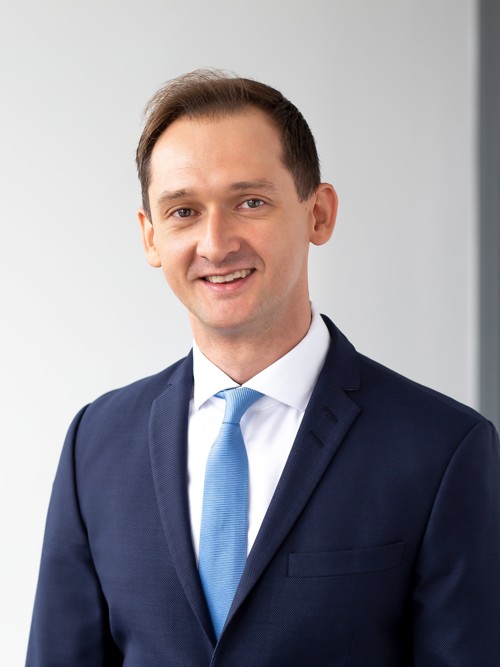

About Dr. Eduard Baitinger

Dr. Eduard Baitinger has been Head of Asset Allocation at FERI AG since 2015. Under the overall responsibility of the CIO of the FERI Group, Dr. Marcel V. Lähn, Dr. Baitinger is responsible for quantitative asset allocation in the CIO Office and various publications on the assessment of the international financial markets.

Before joining FERI, Dr. Baitinger was a research assistant at the University of Bremen and a financial analyst at an asset manager. In 2010, he completed his studies at the University of Bremen with a degree in economics, accompanied by a stay abroad in New York. In 2014, Eduard Baitinger completed his doctorate with distinction on new approaches to quantitative asset management. Dr. Baitinger publishes regularly in academic journals and acts as an academic reviewer.

About FERI

The FERI Group, headquartered in Bad Homburg, Germany, was founded in 1987 and has developed into one of the leading multi-asset investment houses in the German-speaking region. FERI offers tailor-made solutions for institutional investors, family assets and foundations in the business areas:

Founded in 2016, the FERI Cognitive Finance Institute acts as a strategic research center and creative think tank within the FERI Group, with a clear focus on innovative analyses and method development for long-term aspects of economic and capital market research.

Together with MLP, FERI currently manages assets of over EUR 65 billion, including more than EUR 18 billion in alternative investments. In addition to its headquarters in Bad Homburg, the FERI Group also has offices in Düsseldorf, Hamburg, Hanover, Munich, Luxembourg, Vienna and Zurich.


Media relations contact

Julia Kramer

Head of Communications & Spokesperson

Rathausplatz 8-10

Dr. Eduard Baitinger